



FMC Speaker Series May 6, 2026
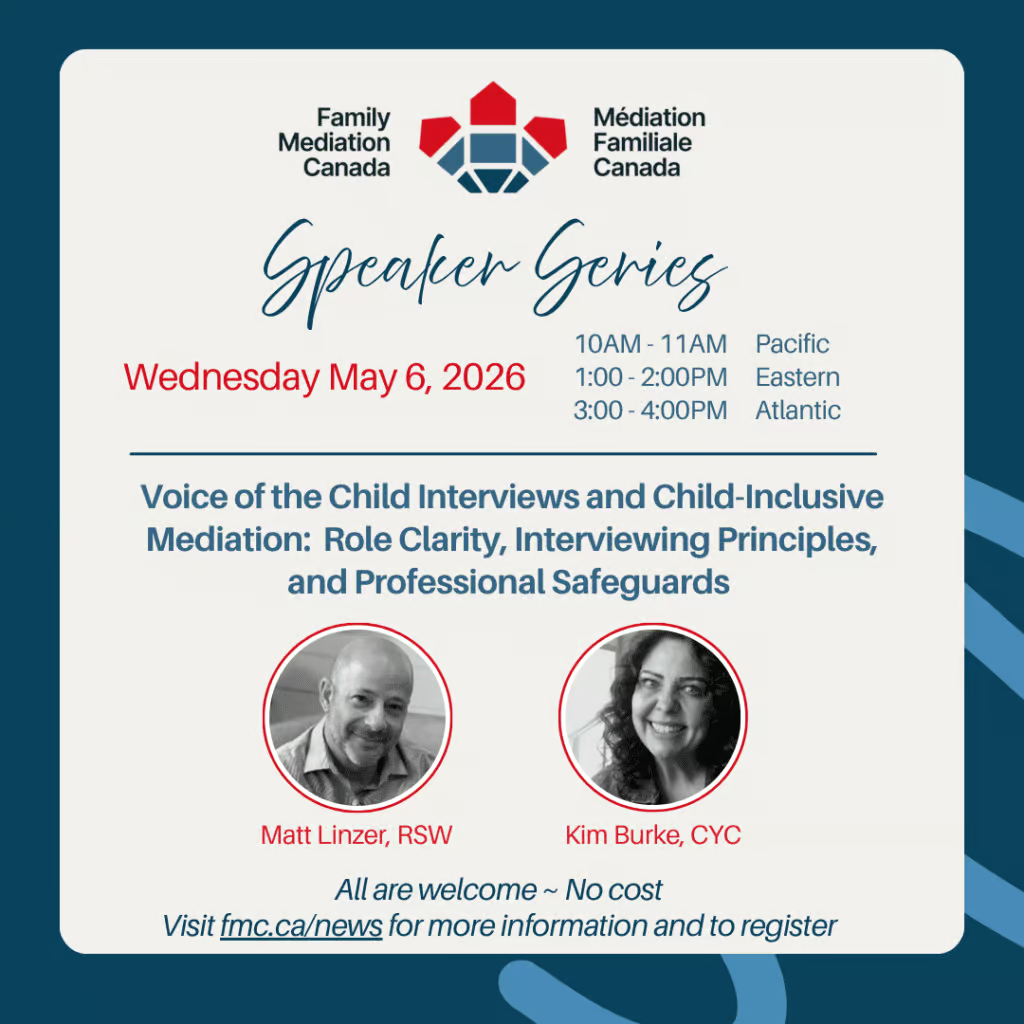
How do we meaningfully include children’s voices in mediation … and where are the boundaries?
As child-inclusive approaches continue to grow, mediators are increasingly navigating questions about role clarity, interviewing practices, and professional safeguards.
Join us for an important conversation with Matt Linzer, RSW, and Kim Burke, CYC to explore how children’s perspectives can be incorporated thoughtfully, ethically, and with care.
Where: online/Zoom link
When: Wednesday, May 6, 2026 at 1pm Eastern (11am Mountain, 10am Pacific)
Register: <click here>
Overview & Learning Objectives
As child-inclusive approaches expand within family mediation, professionals are increasingly asked to consider how children’s perspectives are gathered, for what purpose, and with what safeguards. This webinar provides an overview of Voice of the Child (VOC) interviews and core child interviewing principles, placing VOC within the broader landscape of child-inclusive dispute resolution.
Voice of the Child interviews are one component of a larger decision-making framework, not a stand-alone solution. They represent one method children’s experiences may inform adult understanding alongside legal advocacy, parenting coordination, PN7 reports, or other evaluative processes. The session will distinguish between child-focused processes, where adults consider the child’s best interests, and child-inclusive processes, where children’s perspectives may be incorporated in developmentally appropriate ways.
Participants will explore how children communicate, how questioning can influence responses, and why structured interviewing and professional safeguards are essential when children are involved. Recognizing that practices vary across jurisdictions, the webinar does not promote a single model. Instead, it invites reflection on how children’s voices are currently incorporated into mediation processes and how safeguards support ethical practice.
Importantly, this webinar is not training in Voice of the Child interviewing. Rather, it opens a professional conversation about child inclusion in mediation and explores how incorporating VOC processes may enhance child-inclusive mediation when used appropriately.
Follow this session, participants will be able to:
- Understand the purpose and limits of Voice of the Child interviews. 2. Distinguish child-focused and child-inclusive mediation approaches. 3. Recognize the difference between neutral child interviewing and advocacy-based instruction-taking.
- Identify core interviewing principles that support neutrality and accuracy. 5. Understand the role of professional safeguards such as role clarity, confidentiality, and peer review.
Matt Linzer, RSW, and Kim Burke, CYC are court-qualified subject matter experts in child interviewing and co-founders of Clear Voice Interview Services Inc., a firm specializing in Voice of the Child interviews. Collectively, they have conducted over 5,500 court-informed child interviews and bring more than 20 years of combined experience in specialized child forensic interviewing roles, along with 45 years of combined service within Child and Family Services (CFS).
Both presenters previously held specialized interviewing positions at the Zebra Child & Youth Advocacy Centre, working within multidisciplinary and court-informed environments involving complex, high-conflict matters. They also served as regional lead investigators for Practice Note 5 (PN5) reports, providing oversight and expertise in matters requiring advanced interviewing skill and court-ready analysis. Their work emphasizes developmentally appropriate practice, neutrality, and professional safeguards that protect children from undue influence or pressure, and they are regularly relied upon for their expertise in interviewing standards, professional oversight, and best practices for incorporating children’s perspectives into adult decision-making processes.
👉 Register: <click here>
This webinar is provided for professional education and reflective practice purposes only and does not promote any private service.
The content is intended to support mediator competence, ethical awareness, and thoughtful child-inclusive practice across jurisdictions.